
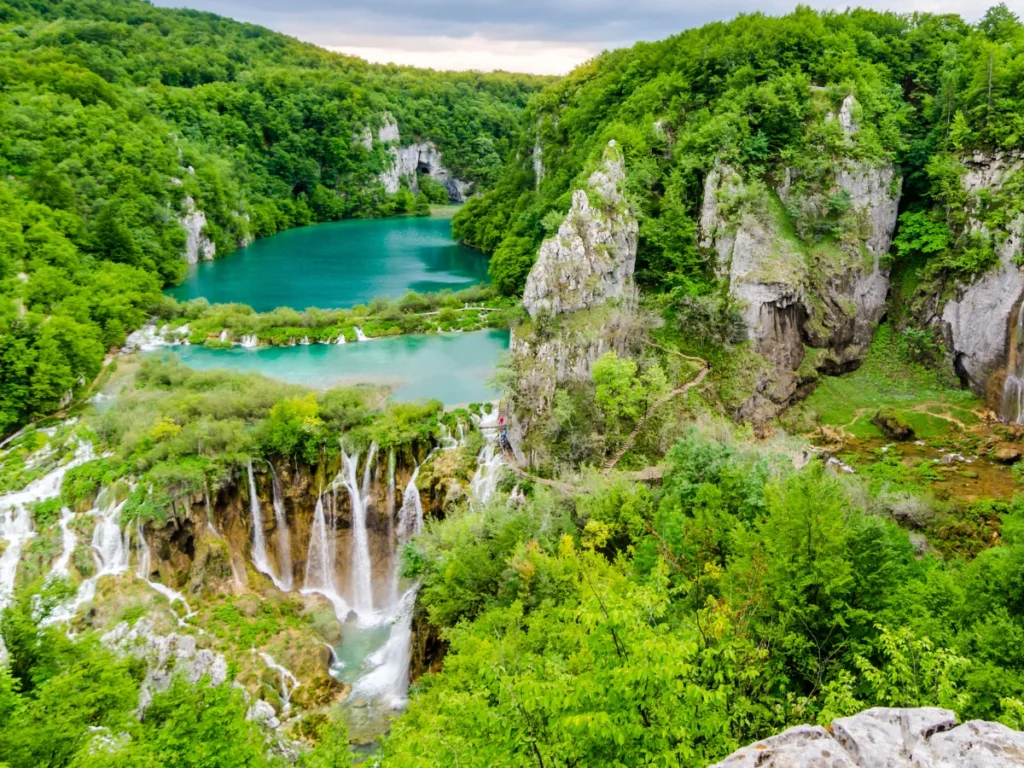
Plitvice Lakes, one of the most beautiful spots in Croatia and a UNESCO World Heritage site is an ideal destination for a one-day trip from Zagreb. This natural paradise captivates visitors with its crystal-clear lakes, stunning waterfalls, and rich flora and fauna. Here’s how to plan the perfect one-day getaway.
Located approximately 130 kilometers from Zagreb, Plitvice Lakes is a popular day trip destination. Several transportation options are available from Zagreb to Plitvice Lakes.
About Plitvice Lakes National Park
Plitvice Lakes National Park, situated between the Mala Kapela and Plješivica mountains, spans an area of approx. Over 75% of the park is covered by forests, fir, and spruce, providing a habitat for diverse flora and fauna. The park is home to protected species such as the brown bear, wolf, and lynx, highlighting its ecological significance. imately 296.85 km², making it the largest national park in Croatia.
Within the park boundaries lie traditional villages like Rastovača, Poljanak, and Plitvica Sela, featuring preserved wooden houses that reflect the region’s rich history and culture.
Plitvice Lakes National Park consists of 16 interconnected lakes divided into two groups: Upper Lakes and Lower Lakes.
Upper Lakes
Located at a higher altitude, the Upper Lakes are surrounded by dense forests and are characterized by larger, calmer bodies of water with natural tufa barriers. Notable lakes in this group include:
- Prošćansko Lake
- Kozjak (the largest lake in the park)
- Galovac
Lower Lakes
Situated in a narrow canyon, the Lower Lakes are smaller and framed by steep cliffs. Key lakes in this group are:
- Milanovac
- Gavanovac
- Kaluđerovac
These lakes are fed by numerous streams and rivers and are connected by cascades and waterfalls, forming a unique hydrological system.
Waterfalls
Plitvice Lakes are famous for their stunning waterfalls, which connect the lakes and create breathtaking scenery:
- Veliki slap (Great Waterfall): At 78 meters, this is the tallest waterfall in Croatia and a must-see attraction at the end of the Lower Lakes.
- Mali slap (Small Waterfall): Smaller in size but captivating with its crystal-clear water cascading over tufa barriers.
- Hidden Waterfalls: Scattered throughout the park, these smaller waterfalls add to the magical atmosphere.
The tufa barriers, formed over tens of thousands of years through the natural process of tufa deposition, are a key feature of the park. This process continues today, meaning the appearance of the lakes and waterfalls is ever-changing.
Flora and Fauna
Plitvice Lakes National Park is a haven for a rich diversity of plant and animal life.
Flora
The park is home to approximately 1,400 plant species, including endemic varieties such as:
- Livadni procjepak (Chouardia litardierei)
- Krški kukurijek (Helleborus multifidus)
It is also notable for its orchids, with over 60 recorded taxa.
Fauna
The park’s wildlife is equally impressive:
- Mammals: Over 50 species, including brown bears, wolves, lynxes, and deer.
- Birds: 168 recorded species, such as woodpeckers, owls, and birds of prey.
- Reptiles: Includes two of Croatia’s venomous snakes—Vipera ammodytes (horned viper) and Vipera berus (common viper).
The preserved habitats within the park provide ideal conditions for the survival and reproduction of many rare and endanWhat the National Park Consists Of
Plitvice Lakes National Park, situated between the Mala Kapela and Plješivica mountains, spans an area of approximately 296.85 km², making it the largest national park in Croatia.
Lakes and Water Systems
The park features 16 interconnected lakes, divided into Upper and Lower Lakes:
- Upper Lakes: Located at higher altitudes, these include Prošćansko Lake, Ciginovac, Okrugljak, Batinovac, Veliko Lake, Malo Lake, Vir, Galovac, Milino Lake, Gradinsko Lake, Burgeti, and Kozjak, the largest lake in the park.
- Lower Lakes: Positioned at lower altitudes, these include Milanovac, Gavanovac, Kaluđerovac, and Novakovića Brod.
The lakes are fed by numerous rivers and streams and connected by cascades and waterfalls, the most famous being Veliki slap (Great Waterfall), which stands 78 meters tall.
Rivers
The park’s main watercourse is the Korana River, which originates beneath the Sastavci waterfalls. Tributaries such as Plitvica and Rječica contribute to the park’s rich hydrological system.
Tourist Infrastructure
The park offers well-developed facilities to ensure a safe and enjoyable visit:
- Walking Trails and Wooden Bridges: A network of paths and bridges allows visitors to explore the park’s stunning landscapes safely.
- Accommodation: Options include:Hotel Jezero: Located in the heart of the park, it offers 205 rooms and 19 suites.
- Hotel Plitvice: Just 200 meters from the main entrance, this hotel is convenient for visitors.
- Dining and Visitor Centers: Restaurants, cafés, and information centers provide services to make the stay more comfortable.
Visitor Activities
The park offers a variety of activities that allow visitors to fully experience its natural beauty.
Hiking Trails
There are eight well-marked hiking trails that combine walking with electric boat and panoramic train rides. Trails cater to different preferences and time constraints:
- Short Routes: Covering about 3.5 km, these take 2–3 hours and highlight key attractions.
- Full-Day Routes: Spanning over 16 km, these allow deeper exploration of the lakes, waterfalls, and viewpoints.
Each trail offers unique views of the lakes and waterfalls, with clear signage and options for adjusting your visit to personal preferences. Comfortable footwear and weather-appropriate clothing are recommended.
Boat Rides and Panoramic Train
- Electric Boat Rides on Kozjak Lake:
A serene 20-minute ride across the largest lake in the park. The eco-friendly boats ensure a quiet and relaxing experience, allowing you to enjoy the crystal-clear water and lush vegetation. Visitors often describe this as a peaceful and immersive encounter with nature. - Panoramic Train Rides:
The panoramic trains connect key points in the park, making it easier for visitors to navigate while offering stunning views of the lakes and waterfalls. A favorite among families, the train ride provides a chance to rest and take in the scenery from a different perspective.
These activities are included in the admission ticket, ensuring visitors can enjoy the park through a mix of active exploration and relaxing rides.
Plitvice Lakes National Park offers a unique opportunity to experience unspoiled nature, impressive waterfalls, and crystal-clear lakes, all while enjoying a rich diversity of flora and fauna. Whether through hiking, boat rides, or train rides, the park ensures an unforgettable adventure for every visitor.
Practical Information for Visiting Plitvice Lakes National Park
Opening Hours and Ticket Prices
The park is open year-round, but operating hours vary by season. During the summer months, the park stays open longer, while in winter, hours are shorter. Ticket prices also change seasonally, with higher rates during peak season (June–September) and discounted prices during the off-season (October–May).
Pro Tip: To secure your visit, it’s recommended that you purchase tickets in advance through the park’s official website.
Seasonal Visit Recommendations
Plitvice Lakes National Park offers a unique experience in every season. To fully enjoy its beauty, it’s essential to adapt your clothing, footwear, and timing to the weather conditions, daylight hours, and crowd levels. Here are recommendations based on each season:
Spring (March, April, May)
- Weather: Temperatures range from 5°C to 20°C. Spring brings warmer days but cool mornings and evenings, with frequent rain, especially in April.
- Sunrise/Sunset:
- Sunrise: 6:00–6:30
- Sunset: 18:30–20:00
- Operating Hours: 8:00–18:00.
- Crowds: Fewer visitors, especially on weekdays. Peak attendance is during holidays and weekends.
- What to Wear:
- Layered clothing—long-sleeve shirts, warm sweaters, and waterproof jackets.
- Waterproof footwear for wet and slippery paths.
- Special Tip: Arrive early in the morning to enjoy the peaceful ambiance. Spring flowers and full waterfalls make for spectacular photos.
Summer (June, July, August)
- Weather: Temperatures range from 20°C to 30°C. Days are sunny with occasional summer storms. Nights are pleasantly cool.
- Sunrise/Sunset:
- Sunrise: 5:00–5:30
- Sunset: 20:00–21:00
- Operating Hours: 7:00–20:00.
- Crowds: Peak crowds between 10:00 and 15:00. Arrive early or late in the afternoon for a quieter experience.
- What to Wear:
- Light, breathable clothing—short-sleeve shirts, shorts, or lightweight pants.
- Comfortable walking shoes or hiking boots.
- Hat, sunglasses, and sunscreen for sun protection.
- Special Tip: A boat ride on Kozjak Lake is especially refreshing during the summer. Take advantage of the long daylight hours for a full-day exploration.
Autumn (September, October, November)
- Weather: Temperatures range from 5°C to 25°C. September days can be warm, while October brings cooler autumn weather, and November may see the first snowfall.
- Sunrise/Sunset:
- Sunrise: 6:30–7:00
- Sunset: 16:30–19:00
- Operating Hours:
- September/October: 8:00–18:00
- November: 8:00–16:00
- Crowds: Moderate in September and October; minimal in November.
- What to Wear:
- Layered clothing—long-sleeve shirts, warm sweaters, and waterproof jackets.
- Waterproof footwear for wet and slippery paths.
- Special Tip: Autumn colors make this season perfect for photography. Visit on weekdays to avoid crowds.
Winter (December, January, February)
- Weather: Temperatures range from -5°C to 5°C. Snowfall is common, and wind can intensify the cold.
- Sunrise/Sunset:
- Sunrise: 7:00–7:30
- Sunset: 16:00–17:00
- Operating Hours: 8:00–16:00.
- Crowds: Minimal, except during holidays and weekends.
- What to Wear:
- Thick winter jackets, thermal layers, and wool sweaters.
- Waterproof, insulated footwear for snow and ice.
- Hat, scarf, and gloves for extra warmth.
- Special Tip: Winter transforms the park into a serene wonderland. Enjoy the tranquility of the snow-covered landscape.
Plan Your Visit
Adapt your trip to the season’s conditions and make the most of the breathtaking scenery of Plitvice Lakes National Park, no matter the time of year!
Where to Eat: Traditional Flavors and Diverse Offerings
Plitvice Lakes National Park not only boasts stunning natural beauty but also offers a rich culinary scene both within the park and along the route from Slunj to Korenica. Whether you’re a fan of traditional cuisine or looking for something modern, the region provides plenty of options to satisfy all tastes.
Restaurants Inside the Park
- Restaurant “Lička kuća” (Entrance 1):
Renowned for its traditional specialties made with local ingredients, this restaurant offers an authentic taste of Lika cuisine. Must-try dishes include Lika lamb, cured meats, and potato-based sides. - Restaurant “Poljana” (Entrance 2):
Located amidst the park’s natural beauty, this restaurant offers a cozy atmosphere and a seasonal menu focusing on regional specialties. - Picnic Areas:
The park features designated picnic spots where visitors can enjoy their own food while respecting environmental conservation rules.
Desserts
For those with a sweet tooth, traditional Lika desserts include:
- Fritule:
Small fried dough balls sprinkled with sugar, perfect for a quick sweet treat. - Apple Cakes and Walnut Rolls:
Simple yet delicious desserts with a comforting homemade flavor.
Diverse Options
Beyond traditional dishes, the area also offers modern culinary options:
- Pizzerias: Ideal for a quick meal or a relaxed dinner.
- Pastry Shops: Great for enjoying cakes, ice cream, and other sweet treats.
- Asian Restaurants: Available for those who prefer exotic flavors.
No matter your choice, the culinary scene around Plitvice Lakes ensures a variety of flavors to satisfy even the most discerning palates.
Photo Spots
Plitvice Lakes is rich with picturesque locations perfect for photography:
- Lookout Points Above Veliki Slap:
These offer panoramic views of the Great Waterfall and the surrounding nature. - Wooden Paths:
The winding paths along the lakes provide excellent spots to capture reflections in the crystal-clear water. - Lake Kozjak Bridges:
Bridges offer stunning views of the water and surrounding vegetation. - Boat Rides:
Photos taken from the eco-friendly boats on Lake Kozjak highlight the tranquil beauty of the lakes.
With its diverse culinary offerings and endless photographic opportunities, Plitvice Lakes National Park ensures an unforgettable experience for all visitors.
How to Get to Plitvice Lakes from Zagreb
By Car
Driving from Zagreb to Plitvice Lakes takes approximately 2 to 2.5 hours, depending on traffic. The recommended route includes taking the A1 highway to Karlovac, then the D1 state road through Slunj and Rastoke to Plitvice Lakes. This combination of highway and state roads ensures a faster and more comfortable journey.
An alternative route through Jastrebarsko and Žumberak Mountain offers scenic views but is not recommended due to longer travel times and poorer road conditions.
Advantages of traveling by car or rental car:
- Flexibility: You can set your own pace and stop at attractions along the way, such as Rastoke.
- Convenience: Suitable for families with children and pets.
- Cost-effectiveness: Sharing fuel and toll costs makes it a budget-friendly option for groups.
By Organized Tours
Numerous travel agencies offer one-day tours to Plitvice Lakes. These packages typically include transportation, a guide, and park admission tickets. Prices range from €50 to €100 per person and often include a visit to the village of Rastoke.
Advantages of organized tours:
- Relaxation: Ideal for seniors, families, or those who want a hassle-free experience without planning.
- Guided Experience: Perfect for those interested in learning about the park’s history and natural landmarks.
- Stress-Free: No need to worry about driving or logistics.
Disadvantage: Tours are often more expensive and less flexible in terms of schedule and itinerary.
By Public Transport
Regular bus lines connect Zagreb to Plitvice Lakes, with a travel time of 2 to 2.5 hours. One-way ticket prices range from €7 to €15. Buses depart from Zagreb Bus Station, and during the summer, service is more frequent. Tickets can easily be reserved and purchased online.
Advantages of public transport:
- Cheapest Option: Ideal for students and travelers on a budget.
- Simplicity: Direct transport without the need to worry about driving.
Disadvantage: Limited flexibility regarding arrival and departure times, with fewer opportunities to visit additional locations.
Each transportation option has its advantages, and the choice depends on your priorities, budget, and preferred experience.