
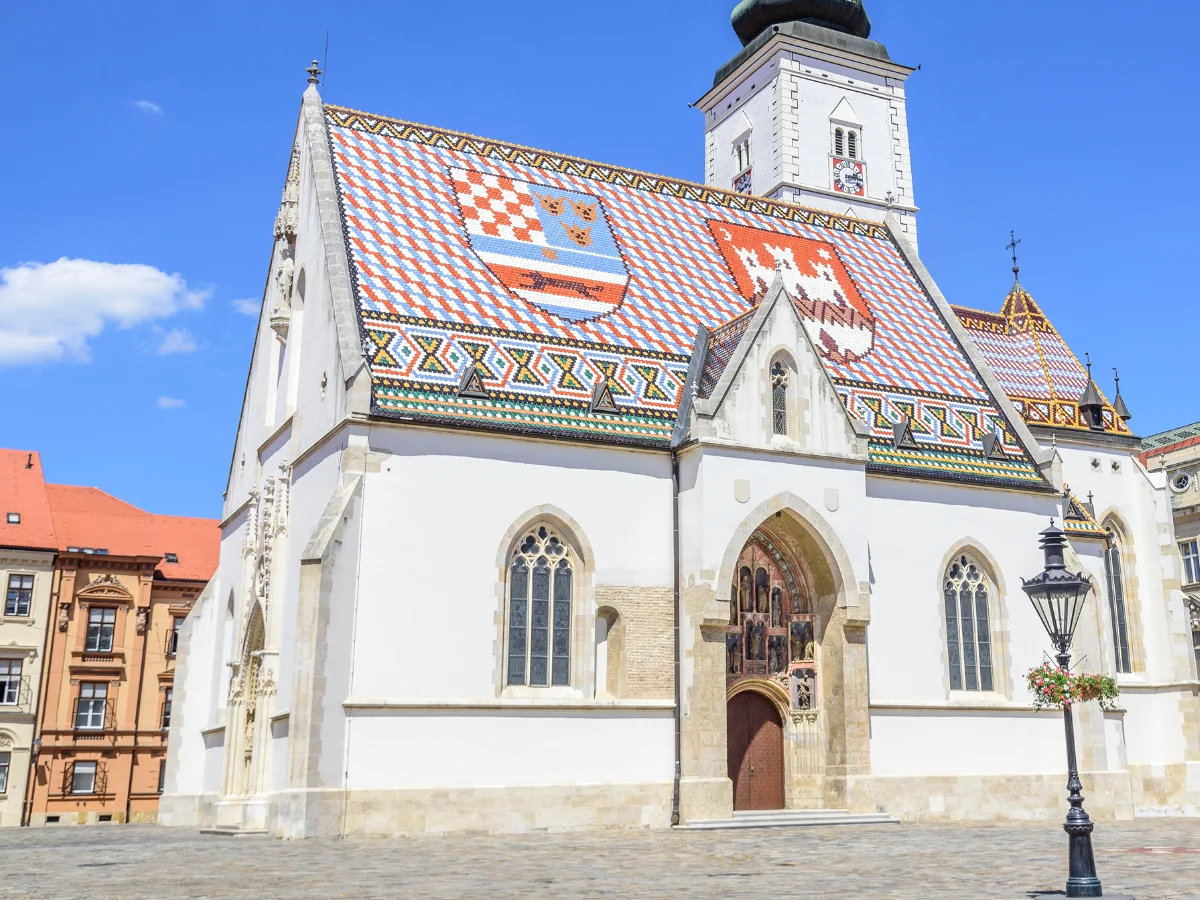
St. Mark's Church (Crkva Sv. Marka)
Key Highlights
- Iconic tiled roof with coats of arms
- Historic St. Mark's Square
- Ivan Meštrović sculptures inside
- Heart of political history
If you're seeking a truly unique photo to commemorate your visit to Zagreb, head to St. Mark's Church. Situated in the heart of the Upper Town (Gornji Grad), this iconic landmark embodies Croatian identity and history. Its vibrant, tiled roof and picturesque square make it an unforgettable backdrop for any traveler.
Architectural and Historical Significance
St. Mark's Church, located in the Upper Town of Zagreb, is one of the city's most iconic and historically significant landmarks. It was originally built in the 13th century and reflects a harmonious blend of Gothic and Romanesque architectural styles. Its unique, colorful tiled roof is the church's most recognizable feature, showcasing two prominent coats of arms: the combined emblem of Croatia, Dalmatia, and Slavonia and the Zagreb city crest.
The church is the centerpiece of St. Mark's Square, a place of great political and historical importance for Croatia. Surrounded by the Croatian Parliament (Sabor) and the Government building, the square serves as a symbol of Croatian statehood and is often the venue for official events, including presidential inaugurations.
Unique Features of the Exterior
The roof tiles of St. Mark's Church, installed during the renovation led by Friedrich von Schmidt and Herman Bollé in 1882, make it one of the most photographed landmarks in Croatia. The ceramic tiles, arranged in vibrant patterns, are a testament to the artistry of their time. On the left side of the roof, the coat of arms of Croatia, Dalmatia, and Slavonia symbolizes the nation's unity, while the right side bears the coat of arms of Zagreb, reflecting the city's central role in Croatian history.
The square bell tower, the southern and western portals, and the chapel of St. Fabian and Sebastian add further architectural intrigue. Originally built as a three-nave hall structure, the church evolved over the centuries, with significant changes like the Neo-Gothic renovation in 1876 that shaped its current appearance.
Interior Treasures
Stepping inside St. Mark's Church reveals a treasure trove of artistic and spiritual heritage. The interior hall, divided by four grand columns, exudes an air of elegance and charm. The altar and ceiling are particularly captivating, featuring sculptures by Ivan Meštrović, Croatia's most renowned sculptor. His works include striking white stone depictions of Christ's life, which add depth and solemnity to the sacred space.
The organ, an essential part of the church's musical history, continues to connect visitors to its past. Though the current organ is a modern installation from 2010, the church's tradition of organ music dates back to at least the 14th century. The organ's melodic notes resonate through the church, transporting listeners to a different era.
The Tragic Tale of Matija Gubec
One of the most dramatic episodes in the history of St. Mark's Square is tied to Matija Gubec, a key figure in the Croatian-Slovenian Peasant Revolt of 1573. Gubec was a visionary leader who stood against the oppressive feudal system of the time. The revolt, which erupted in the regions of Zagorje and Slovenia, sought to overthrow the feudal hierarchy and demand fair treatment for the peasantry.
Unfortunately, the rebellion was short-lived. At the Battle of Stubica in February 1573, Gubec's forces were defeated. Gubec was captured and brought to St. Mark's Square, where he was subjected to a brutal public execution designed to send a message. He was reportedly crowned with a red-hot iron crown to mock his aspirations before being drawn and quartered.
Practical Information: How to Visit
Reaching St. Mark's Church in the Upper Town is an experience in itself. Start your journey at Ban Jelačić Square and walk along Ilica until Tomićeva Ulica, then either climb the stairs or take the funicular. Alternatively, stroll through Tkalčićeva and Radićeva Streets and pass through the historic Stone Gate to reach the square.
Observe the Guard Changing
If visiting between April and October on weekends, be at the square at 12:00 PM (noon) to watch the historic Cravat Regiment's changing of the guard ceremony.
At a Glance
You May Also Like...
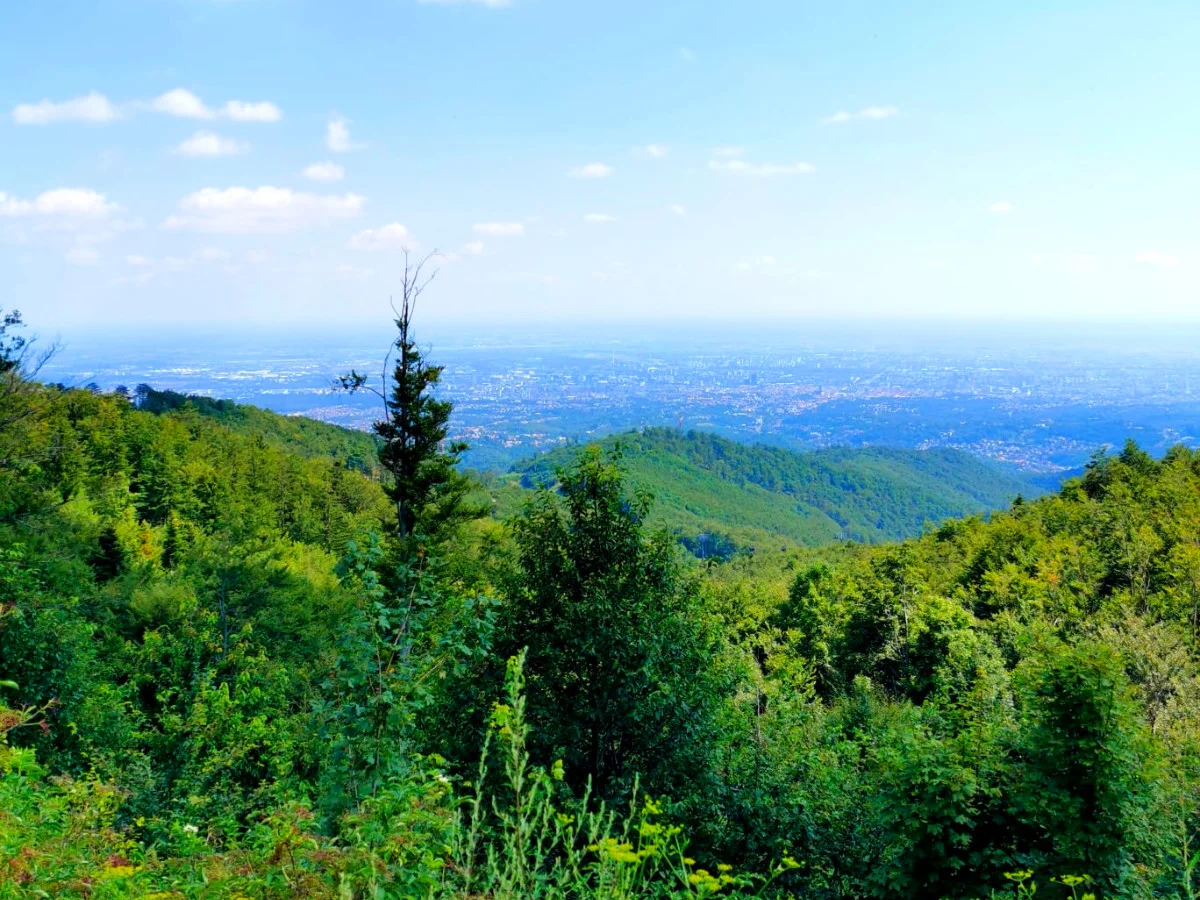
Medvednica Mountain
A gorgeous mountain nature park just north of Zagreb, popular for hiking and winter skiing.
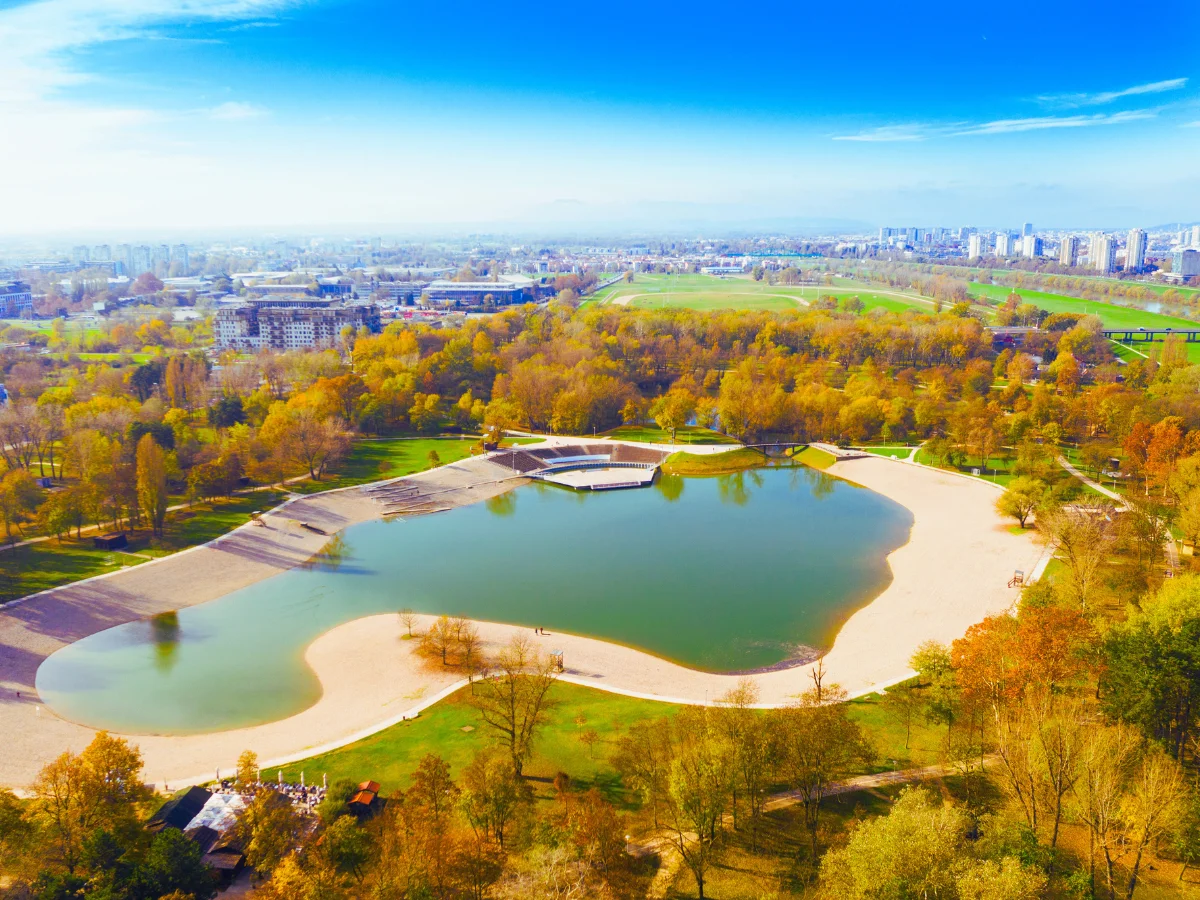
Lake Bundek
A gorgeous open-air recreation center in New Zagreb, perfect for swimming and picnics.
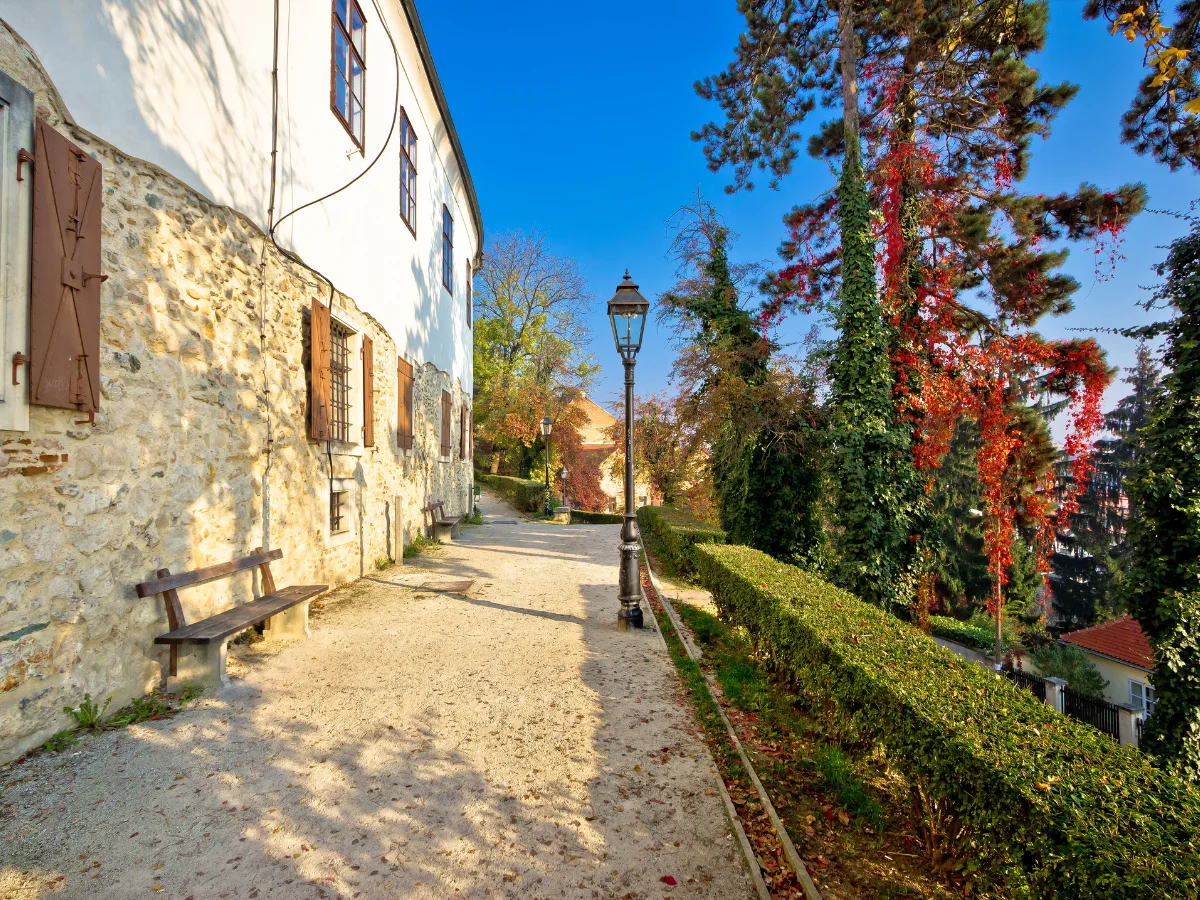
Strossmayer Promenade
One of Zagreb's most romantic pathways, running along the southern edge of Gradec's old walls.